Do You Want to Talk?
HISTORY
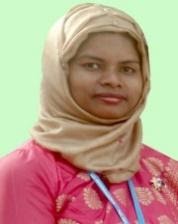
Rowshan Ara
Nursing Instructor
Shaheed Tajuddin Ahmed Nursing College, Gazipur
While working as a Senior Staff Nurse at Bangabandhu Sheikh Mujib Medical University and a trainee at the ICU Nurse Training Program, I heard about “Palliative Care” in 2004. Professor Nezamuddin Ahmad Sir accompanied two visitors from England – Dr. Graham J. Arthers and nurse Elison Foster, who took a class on palliative care. After completing the ICU Nurses Training Program, two of us nurses (me and Roxana Rana) started working temporarily in Palliative Care Service at the Afzalunnesa Foundation in Lalmatia in 2005 at the initiative of Nezam Sir. There, sir gave consultations and we gave nursing care (e.g.- assessment of the referred patient’s issues, wound care, pain diagnosis, giving medication, mental comfort, caregiver counseling, etc.); 3 hours a week (Saturday, Tuesday and Thursday).
After receiving a scholarship from Afzalunnesa Foundation and Rotary Club of Metropolitan, Dhaka in 2006, both of us nurses along with two physicians went for a 6-week BCCPM & BCCPN course at the Institute of Palliative Medicine (IPM) in Kerala, India. Subsequently, the base for providing palliative care service costfree became a little stronger which began in a small room at the Afzalunnesa Foundation. In certain cases, medical, food, travel expenses and financial assistance were provided from the Foundation for terminal patients. If necessary, patients were attended to by visiting homes or hospitals through referrals and given colostomy care, lymphedema care, injections, family training, etc. At the time home care was insufficient (within 2-4 kms of the Foundation and BSMMU). I went to the patients’ houses in a rickshaw with the necessary equipment in a small bag.
The feeling was palpable then, the satisfaction as a lucky and successful nurse was my life-long wish. Working with the initial patients has been the best experience of my nursing career. Deep gratitude and respect to all those patients and their families as I have learned a lot from them.
Fatima (pseudonym), a slum dweller in Mohammadpur, had breast cancer; there was a foul smelling wound and severe pain at the operated area. Initially she regularly visited the foundation for palliative care services but later her body wouldn’t permit the commute so we had to go to her house. We realized then that it was not enough to only alleviate the physical pain caused by the patient’s illness. Due to her illness, she could not work like before, so her sick husband and 5-year-old son suffered from hunger and what would the 13-year-old girl have eaten after returning home from work? We witnessed how difficult it was for a mother to be unable to provide for her children. Bearing this in mind, Nezam Sir and Afzalunnesa Foundation had started working to provide “overall service” to such patients. When Fatima’s condition somewhat improved she had begun working again but got hit by a truck while crossing the road and died. We were deeply saddened by this incident and the foundation tried to stand beside the family.
Hahim (pseudonym), an 18-year-old osteosarcoma patient – the only son and earnable member of a day laborer family in Manikganj. With the aid of Afzalunnesa Foundation, he underwent cancer treatment and palliative care services for nearly 3 years (2006-8). In the last stage he had requested us to visit his grave after death. We, the Palliative Care Team went to Fahim’s grave in Manikganj at the end of 2008 and prayed. The grieving mother is still connected with the palliative care team to find consolation. Today, on this auspicious occasion, I pray for forgiveness for all the deceased patients. I am proud and grateful to be a member of this team.
Rashed Ullah Rana
Assistant Professor
North East Nursing College, South Surma, Sylhet-3100.
Former Principal, Z, M Nursing College, Faridpur.
An affectionate story.
Recalling that day when today’s fatherly figure, Dr. Nizam Uddin Ahmed Sir asked me ‒ “Are you ready to devote yourself to humanitarian service? will you work at the community level? are you interested in working at a lower level? ‒ Then hold my hand.” I didn’t realize then that low level meant heavenly goodness. I was given the good fortune to work with Sir. I was able to do the greatest work in Bangladesh. Since 2004, I proudly introduced services such as palliative care, currently most respected work, and home care service. There was no manpower, no money, no place to sit.
I still remember leaving Bangabandhu Sheikh Mujib Medical University after completing my duties ‒ drawn towards heavenly goodness, behind the Lalmatia Aarong at Afzalunnesa Foundation was our first palliative care base, where we started home care. We started home care but commuted at my own expense, if the patient was poor, the three of us would bear their cost. However, later many of the Foundation’s donors bore this cost, it was small but didn’t stop.
Recalling the China Building at Azimpur in Old Dhaka at the time. Roshan Ara and I go out to home care. Roshan Ara and I went out for home care. After searching a lot, we found the house. There was a scream coming from a room on the seventh floor, with a stench. Closing in, we saw a horrible and heartbreaking scene that a heartless person can never feel without witnessing with their own eyes. A woman screaming with her face covered ‒ the source of the stench and insects marching all over the stand fan to the door. Ignoring the insects and odor, I approached the lady and saw half of her face covered and the other half open. Evidently, a very beautiful lady from the uncovered side but a frightful site appeared when she exposed the covering where there was no flesh from the bottom of her eyes to the bottom of her ears and the insects were eating the rest of the flesh in a row as the woman screamed. Her five-year-old daughter would try peeking at her through the door but fearfully ran away whenever the mother raises her hand or turns around. Her food plate would be tossed from next door and pulled through with bamboo twigs. She was deprived of any care.
Another fairy tale about this building circulated among everyone then. Hair and hair bags came from the bazaar. The China building’s roof and stairs were scattered with hair everywhere. In order to know this reason the public was forbidden to enter the premises. Ignoring these obstacles, Roshan and I went straight to the patient to take care of her ‒ when her family had almost given-up on her. We cleaned her wounds, changed her clothes and bed sheets. We fed her, called her daughter and placed her in the mother’s arms. When the child realized that her mother is odorless and loving as ever, she began to sleep with her until the last moments leading to her death.
I can still call to mind ‒ Fatima, the first patient of palliative care in Bangladesh, whom Sir looked after himself and would take us along. Fatima had breast cancer, her husband would bring her to us ‒ when she was unable due to fever and pain, we would go to her address – Tikkapara slum. Fatima lived in a small hut with 4 people. Her husband sold vegetables on the van but not always and Fatima worked as a housemaid. She was not able to work due to her illness. Cancer is impossible to treat in a family of constant poverty. In this situation, Palliative Care came forward with its small team. In addition to her medication we gave rice, pulses, vegetables, fish etc. as much as possible.
Noteworthy mention ‒ Dr. Rokeya who had breast cancer. She couldn’t sleep for days due to the severity of pain added with the negligence of the family. She sat near me while resting her head on the table for a long time. She raised her head a little and said, “Can you bring me some poison? ‒ I shall take it and die.” She felt peaceful as I lovingly caressed her head when she was in unbearable pain. She shared all her thoughts with me. I told Sir about her troubles. The palliative care team successfully moved forward to ease her pain and give her a little restful sleep. He was very happy until she passed away.
This is how our love continues to this day. Bangabandhu Sheikh Mujib Medical University stood beside many patients after opening its palliative care department. Fortunately, the head of this department was Prof. Dr. Nizam Uddin Ahmed Sir and I was the head or head nurse, Alhamdulillah.
Dr. Syeda Sharmin Quader
Medical officer
Phase B MD Resident,
Department of Palliative Medicine
BSMMU.
Treasurer, Palliative Care Society of Bangladesh
My journey started as an unpaid medical officer at BSMMU’s Anesthesia Analgesia and Intensive Care Unit in January 2007, with the dream of stepping into the sensitive world of Intensive Care Unit. There I was acquainted with Professor Hi Sir through work. He often told me that “You should work in palliative care with Nezam Bhai.” I would nod my head without realizing anything. Palliative care was completely unknown to me then.
Meanwhile, in October I was put on duty in the palliative care unit. I was surprised on the first day. Frustrated! A unit without patients! That happens too? Only Nezam Sir and me. Meantime, to cause extra trouble, sir was taking my lessons every few minutes. I started to get afraid of sir. The unit room no. 223; And Sir’s room number was 36. This is the story of the time when the outpatient department of PG Hospital was an old tin-shaded facility. In fact, Room No. 36 was allotted for palliative care from the Cardiology Department.
Later one day, the much awaited patient came. I saw the first patient in Sir’s chamber, who was admitted to the HDU upon Sir’s request – to the then Chairman of the Anesthesia Department, Shafiqur Rahman Sir – because there was no inter-department or indoor facility to admit patients in palliative care. No shield, no sword – Nidhiram Sardar’s Department. Next day, I heard that the patient had died. I couldn’t understand anything. Started having tangled-up thoughts in my head – why did the patient get admitted, why did they die, what did we do or not do? Questioning what could have been done etc, I became mentally distressed.
Few days later, another patient came in with a swollen face – had superior vena cava obstruction with lung cancer. I still remember, he looked at me and said “Can people live with this swelling?”.
What reply should I give? What language should I speak in? What do I have to say? A while later the patient eagerly asked, “Won’t you admit me?” I still vividly remember that look on the patient’s face – but we were the department of Nidhiram Sardar. The inter-department section was not operational. Being compelled, Nezam Sir admitted the patient to his friend’s clinic, Professor Ahmed Sayeed Sir. The words still ring in my ears – before leaving Sir’s room then, that life-limiting illness afflicted person wistfully only wanted for Sir to go see them and not abandon them. I heard later in the follow-up that the patient had never seen Sir again. Yet, Sir was in that clinic at the time. He was supposed to go see the patient after tea. I felt a sudden shock in my chest that I had felt many times before. Slowly, this is how I embarked on a career in Palliative Care.
The hardships of patients made me very anxious psychologically. Not only anxious as a human being for others but this constantly reminded me of my father. He died of leiomyosarcoma in 2005. The memories of my father’s sufferings would somehow merge together with the hardships of patients. I learned that my father needed palliative care. I did not fully understand the meaning of the word then.
Slowly days went by. As the inter-department section of palliative care opened in 2009, we noticed that along with physical treatment of patients, there is a special need for medicine, food, etc. Doctors-nurses working in palliative care began providing help individually along with emotional assistance. But for how long? Again, the needs of the patients were different. So afterwards, we all decided to stop helping patients individually and start supporting patients as a team. “Palliative Care Society of Bangladesh” originated from this thought. Today we are like one family. Thanks to The Almighty because due to His will I followed this path in this Department. I didn’t start working on my own here. A long time ago, a colleague said, “All your patients die. You seem to have turned to stone.” Is that really so? Feelings have many layers like onion peelings.
The sentiments I felt as the hardships of patients and their families lessened or how much there is to do in doing nothing, if I had not worked in palliative care, this vast world of medical, physical, mental, social and spiritual work-area would have remained undiscovered to me. Just as said by Rabindranath Tagore, ‘there is sorrow, there is death, there is separation / yet peace, yet joy, yet eternity awake’. Today, respectfully to all I say “those who have not entered the everlasting world in the midst of this newness of the palliative will never understand the joys and sorrows of that unseen world like that of my colleague.” Perhaps this statement applies here, ” I wanted a perfect ending. Now I’ve learned, the hard way, that some poems don’t rhyme, and some stories don’t have a clear beginning, middle and end “–Gilda Radner.
This is the reason being surrounded by death has no chance of turning me into stone. I started walking this path in 2007, it is only in my death that my grave becomes the final destination of this path.
Finally, I am forever grateful to the living legend Professor Nizamuddin Ahmed Sir, who did not hesitate to start working with an honorary medical officer.
Dr. AHM Mostak Anwar
Consultant Palliative Care
Palliative care means pain mitigation service, but this idea is not currently widespread. Most people in the society do not have a clear idea about this matter. The contributions of palliative care services is undeniable for patients suffering from incurable diseases and those nearing their end ‒ who were told that there is nothing more to be done
and they should await the inevitable at home. This concept was introduced in our country in 2007 at Bangabandhu Sheikh Mujib Medical University (BSMMU). BSMMU’s Professor of Anesthesia Dr. Nizammuddin Ahmed Sir played a key role in its establishment. The service was introduced on a small scale through Dr Nizam Sir’s office and with selective home care. Gradually, its scope and reach grew. At present the “Department of Palliative Medicine” operates as a full-fledged department, staffed by qualified postgraduates and medical professionals, offering palliative services to patients on an organized scale.
The strange thing is, prior to 2007 I had no clear idea about Palliative Care. As my mother was suffering from Breast Cancer then, the last moments of her life were spent in a lot of pain. I could only watch as she struggled through severe physical pain and mental trauma, water-retention in hands and feet, nausea and anemia, constipation and utter physical frailty. As a doctor, I approached many others in my profession to try and reduce her trauma. But conventional wisdom prevailed ‒ I was repeatedly told, “no further cure is possible, take her home.” Some said to reduce the pain, “give her painkillers, give her suppositories, there is really nothing else to be done,” etc. Faced with such advice, I could no longer wear the mask of a doctor or physician. My family and I became the helpless attendees of the patient on the other side of the doctor’s table.
Fortunately, then I learned through a colleague at the Anesthesia department that Dr Nizam Sir had recently undertaken the work of palliative care. So we availed the service. It is noteworthy that my mother was not the only patient on the list of service recipients ‒ caregivers to the patients, like me, were also included. I still remember the usage of morphine, exercised on a limited basis in an irrelevant sense in conventional medicine. As a result, many symptoms were reduced, in addition to the severity of pain. Thus, in the time leading to her death, she suffered a lot less. This maintained the quality of her life which was only the physical aspect.
On the emotional side, at this difficult time we found a refuge for various suggestions and decisions. In due course, I became interested in palliative care and worked in the fields for a number of years. I tried to alleviate the physical pain and mental trauma of these desperate souls in the last stretch of their lives. Through personal and professional experience I realized how helpless patients and their families can feel when faced with the reality of the terminally ill.
In the field of medicine, only palliative medicine can give relief to the patient at this stage. Death is inevitable. Death cannot be stopped. The story at the heart of palliative care is improving the quality of life for those at death’s door. It is necessary for people to have the right idea about this service. As in this century, such services are becoming increasingly necessary due to the rising average life expectancy across the world’s populations according to WHO. The World Health Organization (WHO) says “the global need for palliative care will continue to grow as a result of the ageing of populations and the rising burden of noncommunicable diseases and some communicable diseases.” This is why it is absolutely necessary that not even a single person is deprived of this service. Access to palliative care must be treated as a fundamental human right.
On a hopeful note, in February 2020 the renowned newspaper The Daily Star reported, “Death Need Not Be Painful: Palliative Care in Bangladesh.” Congratulations to the Palliative Care Society for making this dream a reality.